

 Artificial intelligence can generate information in seconds. It can summarize, it can organize, it can answer questions almost instantly. But it cannot look across a classroom and notice that a child is not acting like themselves.
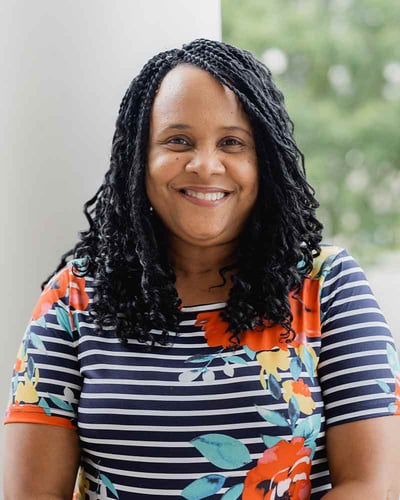
That, according to Trevecca Director of Teacher Education Dr. Yolanda Taylor-Statom, is why AI will not replace teachers.
“AI can do so much,” Taylor-Statom said. “It can give us information at the drop of a hat. But teaching is all about human connection. And that's just not something that AI can recreate.”
Taylor-Statom’s answer comes from a lifetime spent in education. An aspiring teacher from an early age, she earned her education degree from the University of Tennessee at Knoxville before spending 32 years in public schools. She later became part of Trevecca’s first Master of Library and Information Science cohort and went on to earn her doctorate, a milestone she especially wanted her parents to see.
She began teaching at Trevecca in 2005, helping to create the “Education in an Urban Culture” course after fellow professors recognized her experience in urban education. Since the course began 21 years ago, Taylor-Statom has been the only professor to teach it.
“When I moved into the director role, the first thing I said is, ‘I've got to keep that class, because it's my baby,” she said with a laugh. “It's what I do.”
Her work has always centered on students, especially those who need someone to recognize what they are carrying into the classroom. That is where, she says, the difference between information and teaching becomes clear.
In one assignment, she asks her students to write about their favorite teacher. Their answers rarely focus on a teacher’s content knowledge or classroom materials. She says that good teachers learn to see what students need, even when students do not say it out loud.
“AI can simulate empathy, but it doesn't feel it,” she said. “It's not going to be able to have a heartfelt conversation with a student where you look them in the eye and say, ‘Sweetheart, I know what you're going through. And I know this is hard. How can I help you?’”
That’s the kind of awareness in the classroom that she adamantly believes cannot be programmed.
“AI is not going to be able to look into the face of the kid in the classroom who is just a little bit too quiet,” Taylor-Statom said. “AI doesn't know that you're not yourself today, but a good teacher does.”
Still, Taylor-Statom is not afraid of AI. In fact, she uses it.
“I use AI probably every day, if not every other day,” she said. “It streamlines things.”
She says the arrival of AI is not the first time that educators have been worried about a new tool changing the classroom.
“We thought calculators were the devil,” she said. “We thought calculators were going to replace every math teacher, and you would never need to know anything but how to put numbers in a calculator. And that just was not true.”
Taylor-Statom believes AI can help teachers by taking on repetitive tasks and freeing them to spend more time on the work that requires relational presence.
“If we can let AI handle those repetitive tasks, then teachers can spend more time mentoring, creating relationships and supporting the struggling learners,” Taylor-Statom said. “Teachers can spend their time with true instruction, with challenging thinking, trying to get students to think clearer and at a higher level, while also building those human connections that are so important in any area.”
At Trevecca, Taylor-Statom said, the School of Education is not ignoring AI or pretending it will go away. Instead, faculty members are asking how to use it responsibly.
“I think the first thing that Trevecca has done well is we didn't just ignore it,” Taylor-Statom said. “We've embraced it here. And I think the key is asking, ‘How do we use it responsibly? How do we use it ethically?’”
In her own classes, Taylor-Statom invites students to engage AI directly. She may ask students to write a paper through AI, bring it to class and then examine what is missing.
Often, she said, the answer is the same.
“Well, it's the human element,” Taylor-Statom said. “Where AI has just given the facts, I ask the students, ‘What are your feelings about those facts?’ Because that's where the underlying piece lies. And like I said, that's something that AI can't replicate.”
As a Christian educator preparing students to serve in classrooms of their own, the idea of real relationship is critical in the education department led by Taylor-Statom. She tells her students that in public school settings, faith is often shown more clearly through action than words.
“In public schools, it becomes so much more important that you walk rather than talk,” Taylor-Statom said. “It's that modeling that comes through. It's showing students grace at a time of trouble. Students are always watching you, and they're emulating what they see you do.”
That means teachers must understand the difference between knowing something and applying it. AI may be able to provide information, but Taylor-Statom said education has always required more than the transfer of facts.
“Knowledge without application is lost,” she said. “I can spout facts to you all day. And unless I'm a contestant on Jeopardy, that won’t do me any good unless I know how to apply it to my daily life.”
She says students need someone who can make learning matter. They need someone who can build trust. And, put simply, they need teachers they like.
“Kids work harder for teachers that they like,” Taylor-Statom said. “It's not about being their friend or being their buddy. It's about trust. It's about building relationships. You get to say, ‘I'm still your teacher and I'm still in charge here. But you also have to know that I care and that this is all coming from a place of love and that I want the best for you.’”
And that, Taylor-Statom said, is the part of teaching technology cannot replace.
“So, will AI replace teachers? No, I don't think so. But will it change the way we teach? Oh, absolutely.”