
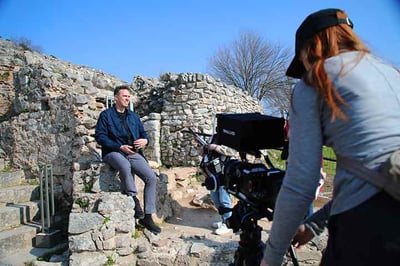
It was spring break in March 2026. For most college students, that means a genuine break from classes. A break from academic rigor. A break from having any responsibilities. But for more than 20 Trevecca students, the short hiatus from classes was spent thousands of miles away, traveling through Greece to film an original documentary. Not much of a “break” was had.
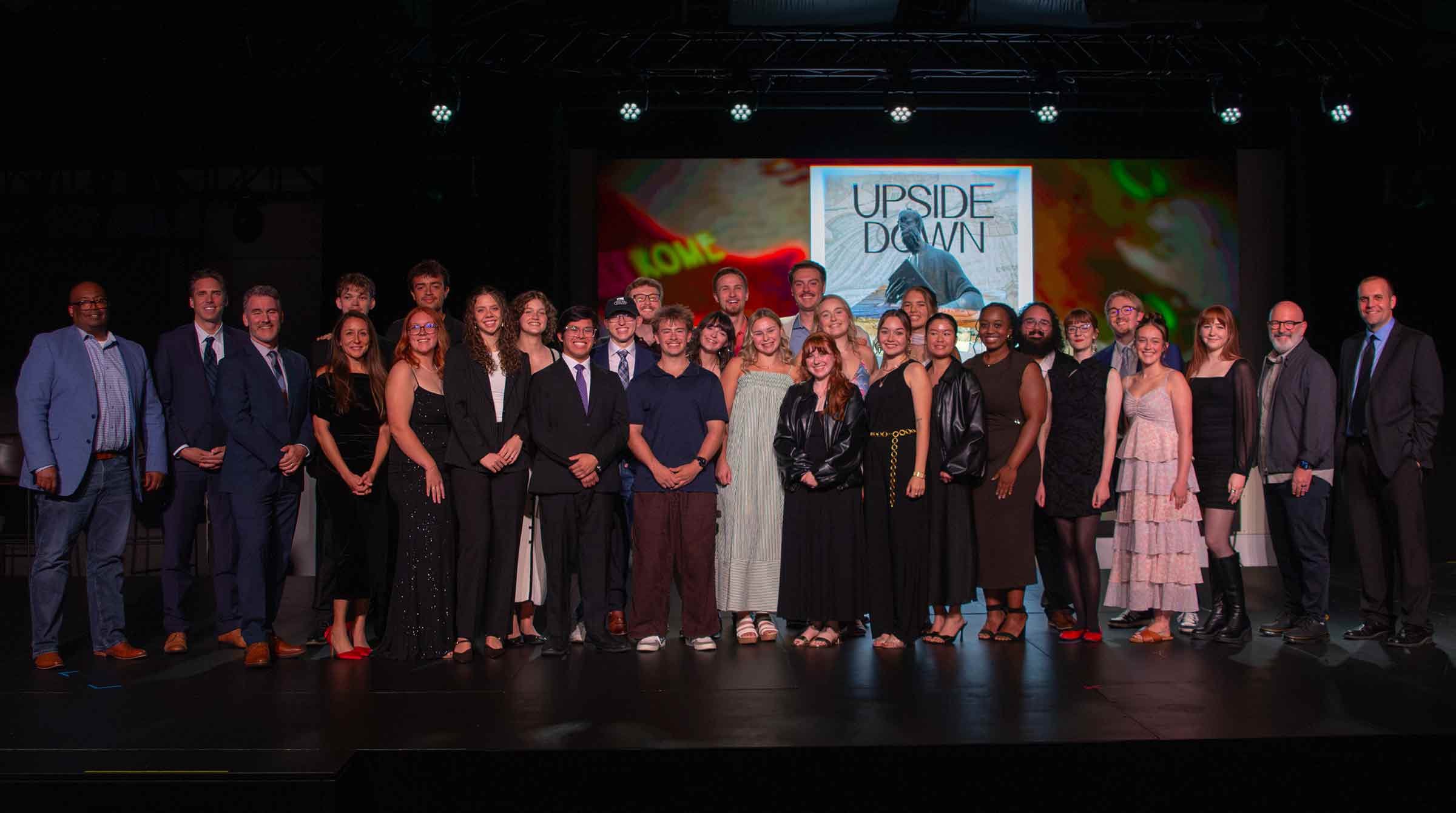
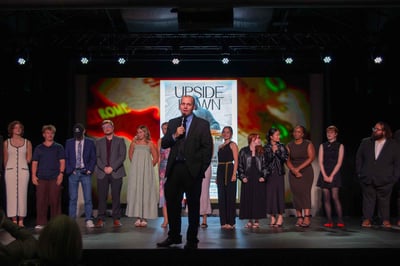
Six months later, on September 28, students and faculty gathered on Trevecca’s campus in Boone Convocation Center for the premiere of “Upside Down: Paul’s Message of New Creation,” and it all proved to be worth it.
The project began through Trevecca’s Faculty-Led Academic Research Experience, or FLARE, which gives undergraduate students opportunities to participate in faculty-led research. This particular FLARE course brought together students from the school’s film and television program with history and religion majors to produce an original documentary on the apostle Paul.
The project involved 11 film and television students, nine religion students and five history students.
 Seth Conley, professor of film and television, served as executive producer. Dr. Tim Gaines, professor of religion, and Dr. Laura Hohman, professor of history, helped lead the academic research and writing behind the film.
The documentary follows the world of Paul and explores his message of new creation through locations connected to his ministry, including Philippi, Thessaloniki and Corinth.
Gaines and Hohman worked with students to study the historical and theological context surrounding Paul’s missionary journeys. Students were divided into teams focused on different cities, and their research eventually helped form the foundation of the documentary script.
“This project brought together students from multiple disciplines; students that would normally not be in class together or be in the same type of work,” said Conley. “But it brought them together and used their passions, their skills and their talents to create a project that is better together than it would’ve been alone.”
“This was such a multi-dimensional academic experience,” Hohman said. “Students gave content presentations to the film students and made suggestions on film locations and artifacts or ruins to film.”
Hohman and Gaines took that research and drafted an initial script for the film, which was passed along to Conley for finalizing.
Gaines saw the same collaboration with his students.
 “I got a front row seat to seeing biblical texts come alive for students who are preparing for ministry,” Gaines said, “I knew their future ministry was going to reverberate with messages from Paul that are very much alive today.”
Even with all of the outstanding collaborative efforts, as executive producer of the documentary, Conley certainly had his hands full. Though always quick to deflect to others’ accomplishments, when pressed about his responsibilities on the project, Conley chuckled.
“It’s work, but I love it,” he said. “I enjoy what I do.”
Josh Moore, operations manager of the film and television department, played a significant role in the film’s post-production, spending hundreds of hours helping shape the footage into the finished documentary.
“This documentary is so good because of him,” Conley said. “He’s been a huge part of this.”
Trevecca also partnered with Doug Beiden, director of recording engineering and producing and director of the songwriting program, who composed the documentary’s original score.
“Not only did I come away convinced that Trevecca has outstanding faculty, but I also got the opportunity to learn from my colleagues who teach in other fields, which was delightful,” Gaines said, further highlighting the interdisciplinary nature of the project.
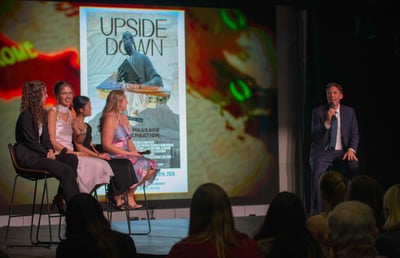 After months of research and filming and then months of post-production, students and faculty gathered in Boone Convocation Center to watch the finished documentary together for its premiere. That event was a success, but “Upside Down” is expected to have a life far beyond a single screening for the Trevecca community. The team plans to submit the documentary to film festivals, while additional screenings are being explored at churches and future Trevecca events.
“My highest hope for the film is that it helps people see how Christ’s resurrection is changing the world in real ways in real places,” Gaines said.
For Conley, the finished documentary is also evidence of what can happen when students are given opportunities to take what they are learning and actually use it.
“Trevecca pays very close attention to finding real world opportunities for students to collaborate in ways that other schools may not,” Conley said.
This project was yet another example of that.